
Customisable Badges: A Complete Guide for Australian Businesses and Resellers
Discover how to source and order customisable badges in Australia — covering types, decoration methods, MOQs, and tips for resellers and businesses.

Written by
Freya Dutta
Stationery & Office
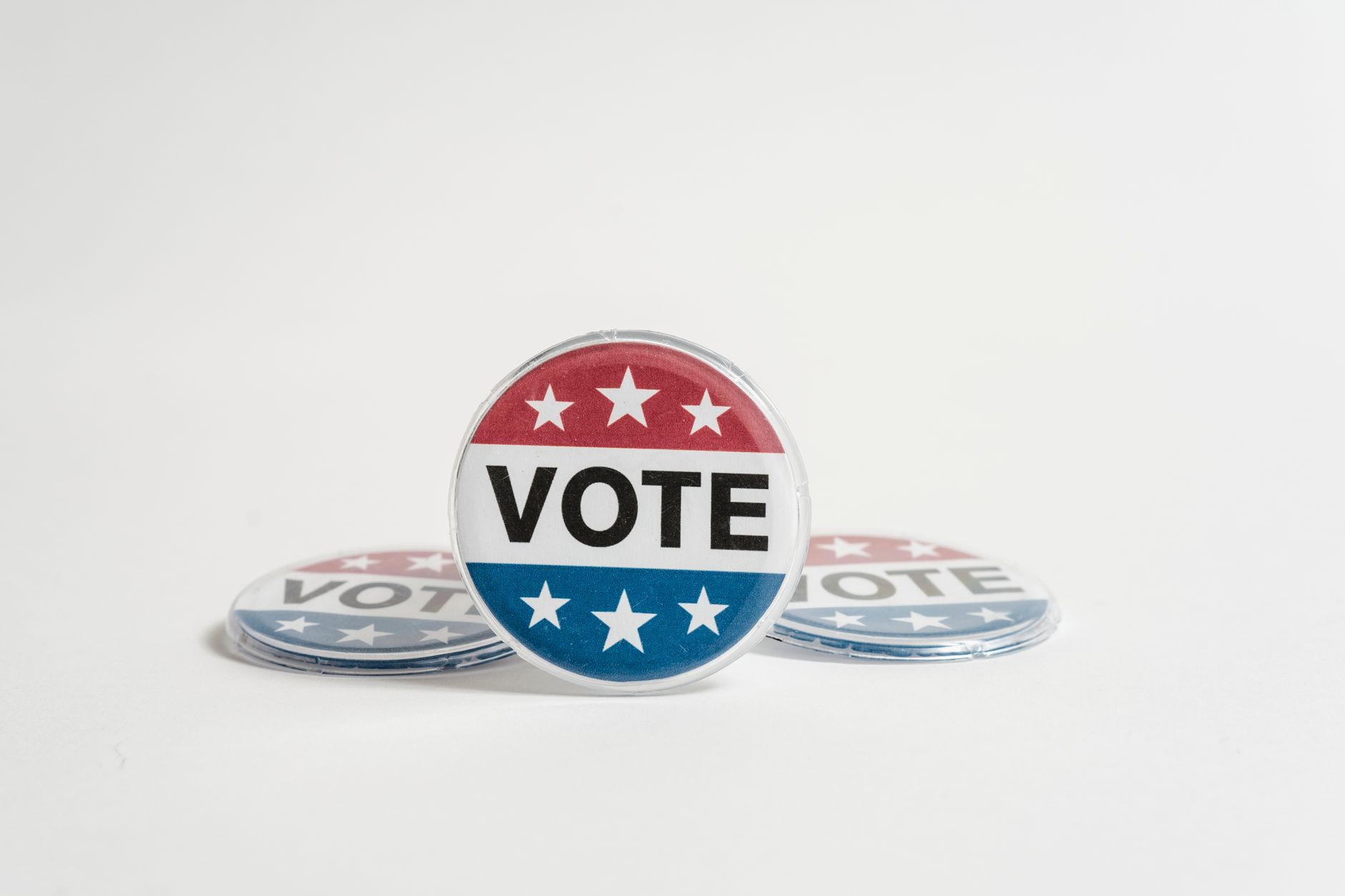
Customisable badges are one of those promotional products that quietly punch well above their weight. Small in size, modest in price, and endlessly versatile — they show up at everything from corporate conferences and school fundraisers to retail staff uniforms and political campaigns. Yet despite how frequently they’re ordered, many businesses and resellers still underestimate how many variables go into getting a badge order right. Choose the wrong substrate, overlook the minimum order quantity, or skip the artwork check, and what should be a straightforward project becomes a headache. This guide cuts through the confusion and gives you a practical, expert-level look at everything you need to know about sourcing customisable badges in Australia.
Why Customisable Badges Remain a Staple Promotional Product
There’s a reason badge orders never seem to slow down regardless of season, industry, or budget cycle. Badges are functional — they identify people, communicate affiliation, and reinforce brand recognition all at once. A retail chain in Sydney distributing staff name badges, a Canberra government agency ordering delegate badges for a parliamentary forum, or a Gold Coast school commissioning house-colour badges for their athletics carnival — all of these represent genuine, recurring demand.
For resellers and marketing agencies, badges also represent a reliable upsell opportunity. A client ordering lanyards for a conference will almost always need badges to match. A business investing in branded uniforms might want embellished lapel pins to complement the look. Understanding how to bundle and present badge options alongside other promotional products gives you a clear commercial advantage.
Beyond their practical utility, customisable badges carry genuine perceived value when done well. A high-quality enamel lapel pin presented in a gift box feels premium in a way that far exceeds its unit cost — something worth keeping in mind when you’re advising clients on corporate gifting alongside products like premium corporate gifts on the Gold Coast.
Types of Customisable Badges: Knowing Your Options
One of the first conversations you need to have — whether you’re the buyer or the reseller — is about badge type. Not all badges are created equal, and the right choice depends entirely on the application.
Button Badges (Tin Badges)
The classic round pin-back button badge remains one of the most popular formats in Australia. They’re cost-effective, available in a wide range of sizes (typically 25mm to 75mm), and support full-colour printed designs. Minimum order quantities typically start from 50 to 100 pieces, making them accessible for smaller campaigns. Schools, charities, political campaigns, and community events lean heavily on this format.
Enamel Lapel Pins
Soft enamel and hard enamel lapel pins sit at the premium end of the spectrum. With recessed areas filled with coloured enamel and a polished or matte metal finish, these are collectible, gift-worthy items. Turnaround times are typically longer — often four to six weeks including production in offshore facilities — so planning lead time carefully matters. MOQs tend to start around 100 pieces. These are frequently ordered by sporting clubs, corporate organisations, and associations as awards or commemorative items.
Printed Name Badges
Used extensively in corporate and hospitality settings, printed name badges are typically made from rigid plastic, aluminium, or acrylic. They’re designed for staff identification and can be produced with permanent printing or left with a reusable insert panel. A Melbourne hotel group outfitting new staff across multiple properties might order hundreds of these at a time with variable names printed on each one — making artwork file management a key consideration.
Magnetic Badges and Clip Badges
For applications where pin-back badges aren’t suitable — workplaces with uniform policies that prohibit pins, for instance — magnetic backing options are widely available. These are popular in retail, hospitality, and healthcare environments where both professionalism and garment care matter.
Woven and Embroidered Badges
Often iron-on or sew-on, woven and embroidered badges are a staple in the apparel and uniform space. A Brisbane sporting club might use these on club jerseys, while a school might commission them as merit or achievement patches. They pair naturally with projects that already involve branded apparel and merch or trucker caps and headwear.
Decoration Methods: What Works for Customisable Badges
Understanding decoration methods is essential when briefing a supplier or quoting a client. The method affects cost, colour accuracy, minimum quantities, and the final look.
Full-colour digital printing is the workhorse of button badge production. Artwork is printed directly onto paper or polypropylene, then encased behind a clear acetate dome and crimped into a tin shell. It supports photographic images, gradients, and complex designs without the colour limitations of some other methods.
Screen printing is used for simpler designs across larger badge runs where colour consistency and cost-per-unit efficiency are priorities. It’s best suited to flat-colour artwork with no gradients.
Laser engraving is common for metal name badges and acrylic badges, producing a clean, permanent result that suits corporate environments well. For context on how laser engraving works across different substrates, it’s worth reviewing how the same technique applies to other products — the principles carry across categories.
Pad printing is another method used for certain plastic and metal badge formats. If you’ve explored pad printing on custom mugs, the same mechanics apply — a silicone pad transfers ink from an etched plate to the product surface, allowing precise placement on curved or irregular surfaces.
Enamel fill and die-casting are specific to enamel lapel pins, where a metal die is created first and then filled with coloured enamel compounds. The die represents a setup cost that’s amortised across larger runs, which is why MOQs for enamel pins tend to be higher.
Key Considerations When Ordering Customisable Badges
Getting the details right at the brief stage saves significant time and cost down the line. Here’s what to lock in before you approach a supplier.
Artwork and File Requirements
Most badge suppliers require vector artwork (AI, EPS, or PDF) for best results, particularly for screen printing and enamel pins where PMS colour matching is required. For digital button badges, high-resolution raster files (300dpi at print size) are generally acceptable. Confirm this with your supplier early — submitting incorrect files is one of the most common causes of production delays.
MOQs and Budget Tiers
Button badges are among the most accessible products in the promotional space from an MOQ perspective. It’s not unusual to find suppliers who will produce 50 units or fewer for sampling purposes. Enamel pins and die-cast products, however, typically require 100 to 250 pieces minimum to make the tooling cost viable.
Unit costs drop considerably with volume. A button badge that costs $1.50 each at 100 pieces might come down to $0.60 each at 1,000 pieces. Building a pricing matrix for your reseller clients that reflects these tiers helps them make informed budget decisions.
Turnaround Times
Standard production turnaround for button badges in Australia is typically five to ten business days once artwork is approved. Enamel pins sourced from offshore manufacturing — the majority of the Australian market — generally carry four to six week lead times, sometimes longer depending on order complexity and freight. If a client has a hard event date, always add a buffer for artwork revisions and proof approvals.
Sustainability Options
Eco-conscious clients are increasingly asking about sustainable alternatives across all product categories. While customisable badges don’t have the same breadth of eco options as, say, recycled branded merchandise or personalised tote bags, there are options — recycled tin shells for button badges, bamboo substrates for name badges, and water-based inks for printing. It’s worth proactively flagging these when you’re working with clients who have sustainability commitments.
Sector Applications: Where Customisable Badges Are Ordered Most
Understanding your client’s sector helps you recommend the right badge format and anticipate their real needs.
Events and conferences are consistent high-volume users of delegate name badges and branded button badges. A Darwin conference organiser might need 500 delegate badges with variable name printing and a further 200 branded button badges for attendee goodie bags. Consider how badges integrate with broader event merchandise suites — there’s useful context in our look at virtual event merchandise trends post-pandemic.
Schools and education are major consumers of button badges, achievement patches, and house-colour pins. A Perth primary school might order custom badges for faction sports days alongside other promotional items for their community events.
Corporate and professional services firms invest in quality name badges and lapel pins as part of their brand standards. These often pair with lanyards, keyrings, and desk accessories — check out promotional keyrings for interior design companies for a sense of how these product categories intersect.
Retail and hospitality environments are steady users of reusable name badges and staff identification products year-round.
Charities and community organisations often order button badges as low-cost fundraising merchandise or awareness items. For charities that also run baby-focused events or expos, there’s natural crossover with other promotional categories — as covered in our guide to promotional merchandise for baby expos in Australia.
Working with Suppliers: What Resellers Need to Know
For resellers and marketing agencies sourcing customisable badges for clients, supplier relationship management is as important as product knowledge. A few practical points:
- Always request a digital proof before approving production. For enamel pins especially, a physical pre-production sample is worth the additional cost and lead time.
- Clarify the repeat order process — can the supplier store artwork and tooling for future reorders? This matters for ongoing clients with recurring badge needs.
- Check packaging options — badges for retail or gift purposes may need individual carding or presentation boxes, which affects per-unit cost.
- Understand origin — most enamel pins and a significant proportion of button badge components are manufactured offshore. Know the lead times and factor in shipping when quoting clients.
Conclusion: Key Takeaways for Sourcing Customisable Badges in Australia
Customisable badges are a deceptively simple product category that rewards careful planning and supplier knowledge. Whether you’re a reseller building out your product catalogue, a marketing agency advising a client on their next event, or a business looking to kit out your team, getting the fundamentals right makes all the difference.
Here are the key takeaways to carry forward:
- Badge type drives everything — button badges, enamel pins, name badges, and woven patches each serve different purposes and have different MOQ, cost, and lead time profiles. Match the format to the application.
- Artwork preparation is critical — vector files and PMS colour references save time, prevent errors, and ensure the finished product matches expectations.
- Lead times vary significantly — domestically produced button badges can turn around in under two weeks, while offshore enamel pins may need six or more weeks of planning runway.
- Volume pricing rewards planning — help clients understand the per-unit savings at higher quantities so they can make strategic decisions about order size.
- Badges work best as part of a broader merchandise suite — they pair naturally with lanyards, apparel, drinkware, and other branded items explored throughout The Supplier Desk’s guides on promotional drinkware and brand awareness.
With the right supplier relationships and product knowledge, customisable badges represent a reliable, high-frequency product category that delivers real value for clients across virtually every sector in Australia.